
Flagler County Touts Fiscal Transparency Ahead of State Mandate
**Opinion Piece**
By Gerry Bledsoe
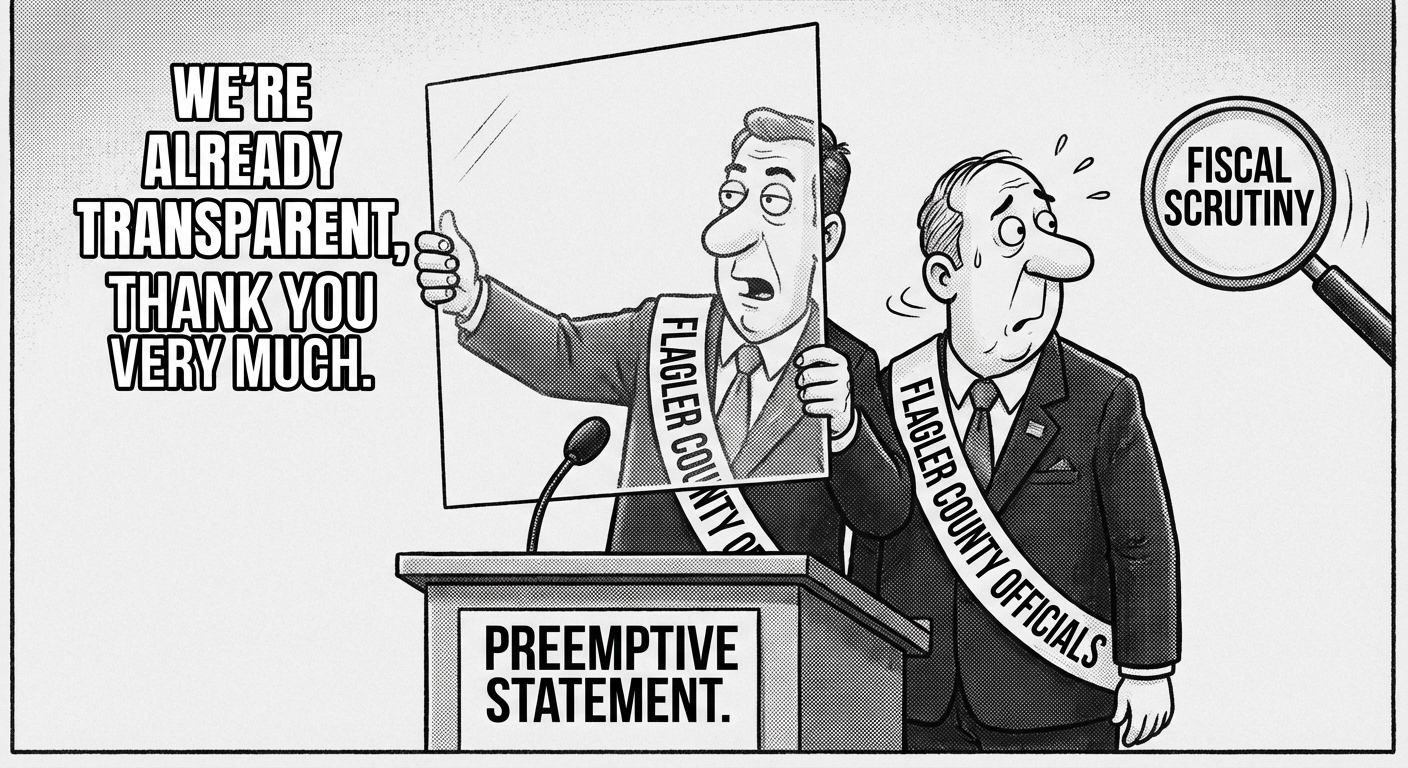
In what appears to be a preemptive strike against potential fiscal scrutiny, Flagler County officials have issued a carefully worded public statement essentially declaring: "We're already transparent, thank you very much."
The missive comes as Florida's state government prepares to implement sweeping transparency requirements under HB 1329, legislation that will mandate local governments to open their financial kimono—metaphorically speaking—to unprecedented public scrutiny beginning in 2026. The new law, championed by state legislators apparently convinced that sunlight remains the best disinfectant for government finances, will require counties and municipalities to provide detailed, easily accessible financial reporting to constituents.
A Record Worth Touting
Rather than waiting for state auditors to come knocking, Flagler County administrators have opted for the diplomatic approach: highlighting their existing fiscal accomplishments before anyone asks uncomfortable questions. The county's statement emphasized a restructured and reduced debt portfolio, augmented reserve funds, and the acquisition of a AA+ bond rating—the financial equivalent of making the honor roll while also being voted "most responsible with money" by credit rating agencies.
County officials marshaled an impressive arsenal of credentials in their defense, pointing to an uninterrupted 16-year streak of national budget excellence awards. This sustained recognition suggests that Flagler County's financial stewardship has been consistently exemplary, at least according to organizations that evaluate such matters professionally rather than anecdotally at coffee shops.
Transparency: Already in Our DNA
The crux of the county's argument rests on a somewhat amusing premise: Florida's forthcoming 2026 transparency mandates merely codify practices that Flagler County has already embraced. In other words, the state legislature has finally caught up to what the county claims it has been doing all along. Officials directed residents to existing transparency dashboards at flaglercounty.gov, where financial data ostensibly awaits public consumption for those intrepid enough to navigate government websites.
The statement also included the obligatory diplomatic genuflection toward the Florida Chief Financial Officer, acknowledging that office's role in the evolving transparency framework. County administrators pledged continued cooperation with state authorities on fiscal accountability measures—a commitment that costs nothing to make and potentially prevents future headaches.
What This Means for Residents
For Palm Coast area residents who prefer their government finances served with a side of accountability, the development represents a net positive, regardless of whether one interprets the county's statement as proactive transparency or defensive positioning. Citizens can access detailed financial information through the county's transparency dashboard, should they wish to examine precisely how their tax dollars are being allocated, spent, and occasionally squirreled away in prudent reserve funds.
Whether HB 1329 will revolutionize government transparency or simply formalize existing best practices remains to be seen. For now, Flagler County appears content to position itself as the teacher's pet in Florida's fiscal accountability classroom.